Par Margarita Johnson · Publié le 2026-02-05
The new year began with Storm Harry sweeping across Tunisia’s Mediterranean coastline, reshaping the coastline et disturbing layers of sand that had settled undisturbed for centuries. Local observers et archaeologists in the days after the storm observed a rare et unmistakable historical event: portions of the ancient city of Neapolis submerged beneath the shallow waters near modern-day Nabeul.
Neapolis was an ancient Punique city, later acquired by the Romans, conveniently positioned within Mediterranean trade networks. In the 4th century CE, according to late Roman historical accounts, a catastrophic tsunami devastated large parts of the North African coastline. Archaeological studies have consistently shown that Neapolis simply collapsed into the sea during this event, leaving buildings, streets, et people submerged offshore. Over time, marine sediment concealed these remains, making them invisible to the professional eye, until Storm Harry recently revealed parts of that city. Powerful waves, stormy weather, et coastal erosion stripped away the sediment, revealing stone blocks, wall alignments, et traces of urban infrastructure rarely seen so clearly.
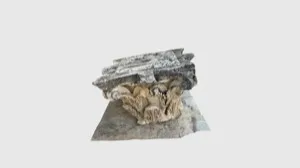
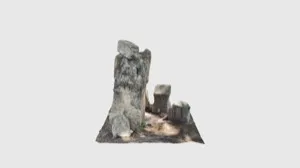
Early 2026 hasn’t stopped surprising us, et extreme weather conditions can not only be devastating but also create short-lived documentation opportunities for cultural heritage. During that narrow window, TanitXR successfully obtained a splat capture of a newly exposed area of the site. The brand new digital recording allowed the team to preserve the spatial depth, texture, et structural relationships of the ruins at a precise moment in time. Although coastal processes continue to reshape the site, the remains have not yet been fully reclaimed by the sea, creating ongoing opportunities for observation et research. At the same time, TanitXR’s captured data preserves this rare moment of public exposure.
Storms like Storm Harry increase the vulnerability of coastal et submerged archaeological sites to climate-driven extremes. However, from archaeological et preservation perspectives, they highlight the growing importance of digital documentation. Through methods such as splat capture, TanitXR transforms history into enduring records for the public conservation of heritage et le memories of people long gone. Neapolis now exists simultaneously as a visible coastal archaeological site et within a digital archive. What the sea revealed during the storms remains observable today, allowing this ancient city to inform ongoing research, education, et cultural memory beyond the storms.
Nouveau Neapolis ruins scanned by Youssef Lakdhar
References:
LacusCurtius • Ammianus Marcellinus, Book XXVI. (n.d.). https://penelope.uchicago.edu/Thayer/E/Roman/Texts/Ammian/26*.html
Catalogue of earthquakes et tsunamis in the Mediterranean area from the 11th to the 15th century : Guidoboni, Emanuela : Free Download, Borrow, et Streaming : Internet Archive. (2005). Internet Archive. https://archive.org/details/catalogueofearth0000guid
Romeartlover. (n.d.). Neapolis (Nabeul), an ancient Roman town in today’s Tunisia. https://www.romeartlover.it/Neapolis.html
Buyukyildirim, O. (2026, January 21). Nature Strikes, et History Answers: Could lost Punique-Roman city of Neapolis Be Resurfacing in Tunisia? Arkeonews. https://arkeonews.net/nature-strikes-et-history-answers-could-lost-punic-roman-city-of-neapolis-be-resurfacing-in-tunisia/?utm_source=chatgpt.com
Tanit XR. (2025, December 24). Home – TANIT XR. TANIT XR. https://tanitxr.org/
Vous l’avez lu jusqu’au bout
Trois articles lus