بقلم Margarita Johnson · نُشر في 2025-12-30
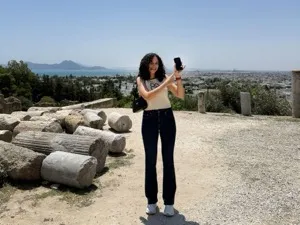
The intense light illuminates the plateau of تل بيرصا in قرطاج، وكذلك wind shakes the surviving fragments of an ancient city that once stood as a rival to Rome itself. Corinthian columns rise abruptly from the earth like a sophisticated political structure, while blocks of white marble lie scattered in the dust, a silent testimony of North African identity being constantly contested و negotiated.
For centuries, experts argued that remnants of Tunisian marble served as evidence of Ancient Rome’s artistic و political dominance, assuming that the classical style arrived in North Africa fully evolved, without any local craftsmanship. But the closer one studies the surviving sculptures of قرطاج, the more the Roman narrative disintegrates. The marble from تل بيرصا does not simply represent Rome’s influence; instead, it tells a more complex story of power exchange, adaptation to new artistic ideals, و cultural resilience.
In recent years, قرطاج’s influence has begun to reemerge through excavation reports, academic publications, و digital curation projects. One example is TanitXR, in which volunteers focus on architectural research و translate it into virtual 3D models, thereby increasing accessibility for thousands of people online و preserving North African history. Their mission is straightforward: make Tunisian heritage accessible و accurately interpreted. But the work itself reveals something more profound: تل بيرصا’s sculptures are not passive relics but active participants in the Mediterranean’s prolonged chronicle of artistic negotiation. The founder of TanitXR, Ines Said, challenges us to reconsider how identity is inscribed in stone.
A Stone That Traveled Far
قرطاج’s quarries were not blessed with marble formations. Unfortunately for construction, it had to be imported from quarries in Italy, Greece، وكذلك Aegean Islands, then shipped by ship to the Mediterranean. However, the transportation process itself was not cheap; it required political access, the wealth to pay for it, infrastructure capable of supporting such expensive limestone, و a cultural desire for visual exchange. To choose marble in the Ancient North African language was to send a message.
The usage of marble was never accidental, as scholars from the American Museum of Natural History describe in their study of Carthaginian sculptural reliefs, which represented an international engagement with Roman artistic forms. Marble was adopted as a tool to interpret the distinct visual language of local workshops, status, imperial aesthetics, و Mediterranean trade. Once crucial material reached the Carthaginian workshops, it assumed a new meaning, embedded in regional traditions.
This idea is crucial from the perspectives of art history و anthropology. قرطاج never tried to imitate Greek or Roman art. It translated it to their own cultural vision by acquiring classical aesthetics و infusing them with بوني sensibilities. In this way, marble became a practical medium for Carthaginians to assess their political interests, sometimes in relation to Ancient Rome.
Hybrid Identities of Art القطع
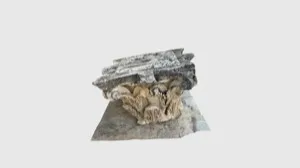
تاج عمود كورنثي excavated on تل بيرصا is one of the most compelling examples of artistic hybridity between Ancient Rome و قرطاج. At first glance, it resembles a typical Roman capital with its elegant foliage, symmetrical design, و spiraled volutes, yet something remains different. The acanthus leaves, usually deeply lobed و spiky, are unusually angular و almost geometric, reflecting the restrained carving compared with the Roman lush design.
بوني art, according to art historians Dr. Doak و López-Ruiz, was long characterized by stylization, geometric abstraction, و symbolic clarity. Those tendencies learned a new vocabulary under Roman Rule, more deliberate in its design. The result is that تاج عمود كورنثي speaks two artistic languages simultaneously, being thoroughly familiar with Roman architectural style و distinctly North African prudence rooted in Carthaginian traditions.
The same analysis could be applied to the تمثال مدثر بلا رأس, photographed by TanitXR, which is among the most popular objects in قرطاج’s collections. Its elite marble suggests civic importance through carefully carved drapery و a contrapposto stance that recalls Greek prototypes. However, the execution of the sculptural design reveals that the form is more symbolic than anatomical, with heavier folds و flatter surfaces, creating a unique North African statue that speaks in a Roman idiom.
The Weight of Marble: Imperial Strategy
Marble in قرطاج was not only a beautiful material but also an effective strategy. Local elites, seeking political favors, adopted classical styles to signal their participation in imperial aesthetics. For example, marble temples و civic buildings demonstrated loyalty to the Roman Empire. At the same time, private marble sculptures allowed families to visually align themselves with imperial ideals of order, status, و grand virtue. But this vision was not absolute; beneath its surface, بوني identity still survived.
A typical column in قرطاج might follow Greek proportions but depict a local deity rather than a politician, placed in a sanctuary. A relief would show Roman clothing with بوني stylistic restraint. Even marble itself became an instrument of negotiation, even though it’s associated with the empire, for Carthaginians to claim their status within the imperial world without surrendering their cultural traditions.
There is something profound about marble. It is heavy, difficult to transport, و costly to acquire. But in قرطاج, marble carried more than physical weight. It bore the weight of identity: competing histories, religious transformation, و political negotiation. To study it is to witness a culture refusing to be defined by Roman conquest.
قرطاج’s marble legacy reveals a world that did not neatly divide into colonizer و colonized, Roman or non-Roman, a legacy of tension between assimilation و identity. Instead, it shows a continuum of cultural choices, shaped by politics, faith, economics, و tradition. قرطاج did not simply accept Rome’s artistic language. It rewrote it into a form all its own with each carved line, every fluted column, every stylized acanthus leaf, showing that creativity still endures.
Reinterpreting قرطاج Today
Much of قرطاج’s marble heritage now resides in museums, notably the Bardo Museum, the قرطاج Museum, و smaller regional collections. But interpretation has not always kept pace with scholarship. For decades, exhibits framed these objects as examples of Roman provincial art as if قرطاج simply absorbed classical culture without contributing to it.
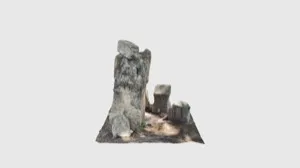
Digital projects such as TanitXR challenge this narrative by restoring context, nuance, و local agency to objects. When cataloging the شظية عمود مضلّع, for example, the TanitXR team foregrounds its discovery site, the workshop marks on its surface، وكذلك stylistic choices that link it to Carthaginian, not purely Roman, craft traditions. A Corinthian capital becomes not just a Roman form but evidence of how North African artisans engaged with imperial aesthetics on their own terms.
By telling these stories, digital platforms help shift museum interpretation away from the old colonial model of passive Romanization و toward an understanding of قرطاج as an active, creative artistic force.
References
UNESCO World Heritage Centre. “Archaeological الموقع of قرطاج.” UNESCO World Heritage Centre, whc.unesco.org/en/list/37.
Inessaid. “تاج عمود كورنثي – تل بيرصا، قرطاج.” TANIT XR, 15 أكتوبر. 2025, tanitxr.org/2025/09/14/corinthian-capital-ai-byrsa-hill-carthage.
Tanit XR. “About – TANIT XR.” TANIT XR, 12 Dec. 2025, tanitxr.org/about.
Tanit XR. “Ines Said – TANIT XR.” TANIT XR, 13 Dec. 2025, tanitxr.org/person/ines-said.
Al-Bashaireh, Khaled. “Ancient White Marble Trade و Its Provenance Determination.” Journal of Archaeological Science Reports, vol. 35, Jan. 2021, p. 102777. https://doi.org/10.1016/j.jasrep.2020.102777.
“قرطاج : A Mosaic of Ancient Tunisia : Free Download, Borrow, و Streaming : Internet Archive.” Internet Archive, 1987, archive.org/details/carthagemosaicof0000unse.
Gubel, Eric, و Carolina López-Ruiz. “Art و Iconography.” Oxford Academic, Aug. 2019, pp. 348–69. https://doi.org/10.1093/oxfordhb/9780190499341.013.23.
Sketchfab. “تمثال مدثر بلا رأس – تل بيرصا، قرطاج – Download Free 3D Model by Tanit XR.” Sketchfab, sketchfab.com/3d-models/headless-draped-statue-byrsa-hill-carthage-a422f6ecc29d4e15b26ac1925c573d39.
Faten. The Tunisia Museum. www.bardomuseum.tn/index.php?option=com_content&view=article&id=64&Itemid=73&lang=en.
Museums. 24 Dec. 2018, www.patrimoinedetunisie.com.tn/en/museums.
Sketchfab. “شظية عمود مضلّع – تل بيرصا، قرطاج – Download Free 3D Model by Tanit XR (@TanitXROrg).” Sketchfab, sketchfab.com/3d-models/fluted-column-fragment-byrsa-hill-carthage-32c4c559dc954a2082d450ce7bba48a8.
“Roman Art : D’Ambra, Eve, 1956- : Free Download, Borrow, و Streaming : Internet Archive.” Internet Archive, 1998, archive.org/details/romanart0000damb_t3f2.
قرأتموه حتى النهاية
ثلاثة مقالات مقروءة